
DefendAir By ParaZero
Next-Gen Net-Based Drone Interception
Where The Threat Ends, Victory Begins.
DefendAir by ParaZero Technologies is an easy-to-operate, cost-effective counter-drone solution utilizing a customizable, platform-agnostic “Net Pod” designed to neutralize a wide array of aerial threats.
- 100%Interception success in demos under combat conditions
- 77mphFast attack drones intercepted
- Net-basedPhysical interception, effective where EW jamming fails
- 0explosivesNon-explosive interception, minimal collateral risk near people and protected sites
The threat
The Drone Threat – No Longer a Theory
- Fast incoming drones equipped with explosives, deadly for ground forces
- Fiber-Optic guided drones (up to 60 KM) immune to Electronic Warfare (EW) or Radio Frequencies (RF) Jamming
- Attacks on critical infrastructures, armored vehicles, forces gathering, landing zones, ground forces, logistics convoys and areas
Capabilities
The DefendAir Capabilities
DefendAir by ParaZero Technologies is setting the standard in net-based CUAS with a proven, easy-to-operate system built to neutralize everything from high-speed explosive drones to heavy-lifting smugglers.
Proven experience in net-based drone interception
Modular and customizable solution for critical infrastructure, strategic sites, logistics convoys and ground forces
Effective against a wide array of threats from explosive drones flying at 77 mph to large heavy-lifting drones for smuggling up to 75 lbs
Cost effective solution
Easy to operate
Available now


Technology
The Pod – The Core of the DefendAir Technology
At the core of DefendAir technology is the Net Pod, a highly adaptable, single interception “magazine” engineered with configurable net sizes and adjustable launch power to meet any mission requirement.
01
Net Size
Adapted to different engagement scenarios
02
Threat’s size, speed & weight
Selected based on mission, environment, and interception requirements
03
Launch Power
Adjustable to support different interception ranges and operational needs
DefendAir Products
Different Threats, Different DefendAir Solutions

Handheld DefendAir · Manual
Personal Protection for VIPs and Soldiers
Handheld DefendAir net launchers, in pistol (LifeSaver) and rifle (Net Launcher) configurations, give security details and soldiers in the field an immediate, non-explosive answer to hostile drones at close range.
Watch it in action
Autonomous DefendAir
Autonomous Vehicle Protection
Autonomous DefendAir Net Pods mount on armored and tactical vehicles, work with the vehicle’s detection layer and intercept incoming drones before they reach the crew.
Watch it in action
Autonomous DefendAir
Autonomous Area Protection: TillOnAIR
TillOnAIR detects, launches and intercepts hostile drones over a defended area, using reusable interceptors with no GPS, no seeker and no explosives.
Watch it in action
Autonomous · 3rd Party Integration
Long Range Airborne Defense
Watch: Long range counter-UAS with XTENDField-proven
See DefendAir in Action
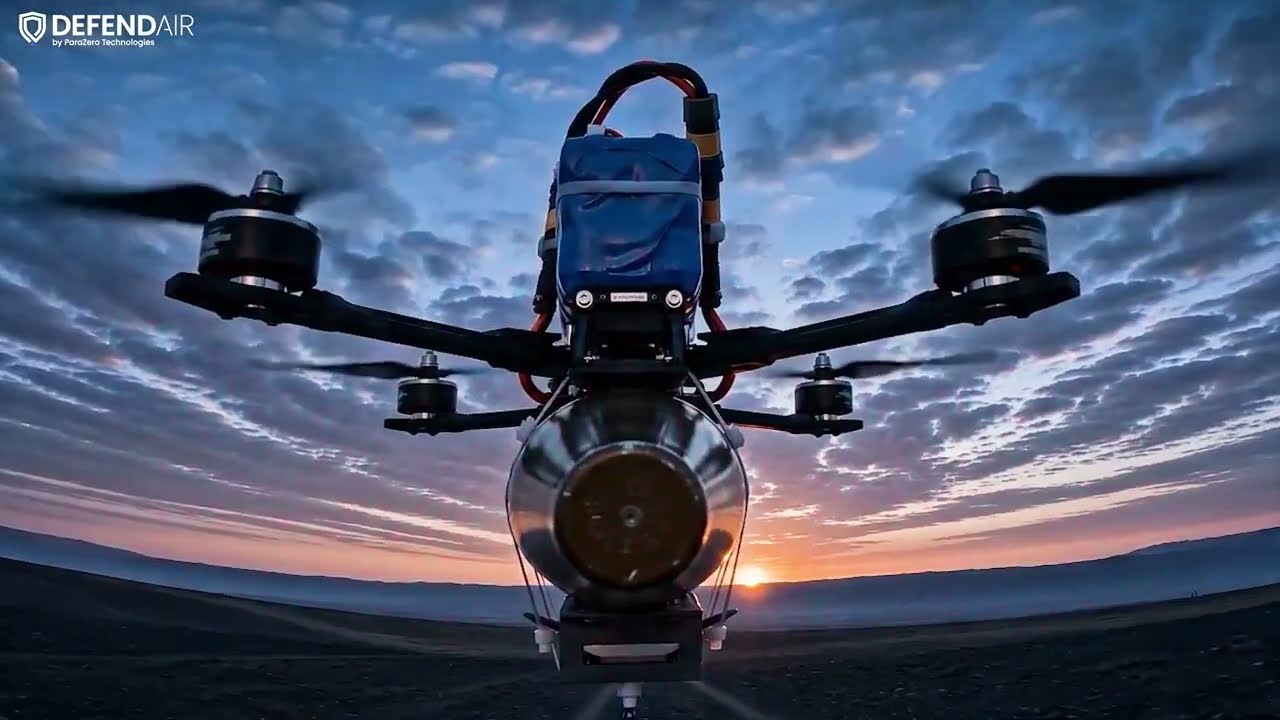 The DefendAir filmDefendAir – Where the Threat Ends, Victory Begins
 First U.S. Live Demo | 100% FPV Drone Interception Success
 DefendAir vs Fast Incoming FPV Attack Drone
 Counter-UAS Active Protection System for Vehicles
 30 Seconds. Multiple Interceptions. One Handheld Counter-UAS Capability
 Live Demo in France
 Long Range Counter-UAS Capability with XTEND
 TillOnAIR | Fully Autonomous Counter-UAS
 Personal Protection & Point Protection Live Demo
Where it protects
DefendAir Use Cases

Air Defense Systems & Radar Stations

Airports & Critical Infrastructure

High-Value Sites

Armored Vehicles

Soldiers

Government Buildings
Frequently Asked Questions
Counter-UAS and net-based drone interception, explained
How do counter-UAS (counter-drone) systems work?
Counter-UAS systems work in two stages: detection and mitigation. Detection uses radar, radio frequency scanning, optical or infrared sensors, and acoustic methods to find and track a drone. Mitigation removes the threat through jamming, spoofing, or physical interception. A layered defense combines several of these methods. DefendAir sits at the last layer, as a physical interception capability that connects to existing detection and electronic warfare frameworks, offering a final level of protection.
What is the difference between kinetic and non-kinetic counter-drone systems, and where does net-based interception fit?
Non-kinetic systems act on the drone's signals, usually through RF or GNSS jamming. Kinetic systems act on the drone physically, and include projectiles, directed energy, and nets. Net-based interception is a physical method that does not use a warhead or conventional gunfire. DefendAir uses proprietary, patented net-launcher technology to capture the drone intact, which lowers the risk of explosive effects and fragmentation.
Why is jamming not enough against modern drone threats?
Jamming works only when the drone depends on a live RF or GNSS link. Pre-programmed, autonomous, and fiber-optic-guided drones can keep flying without one. Jamming can also disrupt aviation and communications near airports and cities. DefendAir intercepts physically and needs no RF link to the threat, so it still works where signals are denied, jammed, or absent.
How do you stop a drone safely in an urban area or around a critical site?
Urban and critical-site defense has to neutralize the threat without unacceptable collateral, regulatory, aviation, or communications effects. Explosive and high-energy methods can endanger people and property below, and a downed drone can still cause harm. DefendAir's controlled, non-explosive net interception is designed for dense urban areas, government buildings, sensitive facilities, and the assets around them.
Can a counter-drone system be cost-effective against cheap, expendable drones?
Counter-UAS success depends on cost exchange: spending an expensive interceptor on a low-cost drone is not sustainable at scale. The question is whether interceptions are cost-effective, repeatable, and sustainable. DefendAir is built as an easy-to-operate, cost-effective last-layer capability. Its customizable Net Pod platforms match the engagement to the threat.
Can net-based interception integrate with our existing sensors, vehicles, and defense platforms?
Yes. The platform-agnostic Net Pod is designed to integrate as the physical interception component of third-party counter-UAS architectures. That includes detection and tracking systems, vehicle-mounted and fixed-site systems, turrets, and autonomous platforms. Integrating counter-UAS systems from different vendors involves calibration, false-positive testing, and interface alignment, and ParaZero provides technical support for that work.
